“That mark was already there” ends here.
A damage dispute usually turns on what the car looked like when the keys moved. A tick-box diagram and memory is a weak answer to that question. Timestamped photographs from both ends of the hire make the dispute a comparison instead of an argument.
Private beta applications open, public launch January 2027The hirer pays their own £4.99 verification feeSet up with you by a founder
No firm has signed yet. KeyProof is choosing up to five UK hire firms for its private beta, set up and walked through their first real hire by a founder: request beta access.
KeyProof Ltd 17333773ICO ZC195906Own PI £1m + cyber £500k, Hiscox
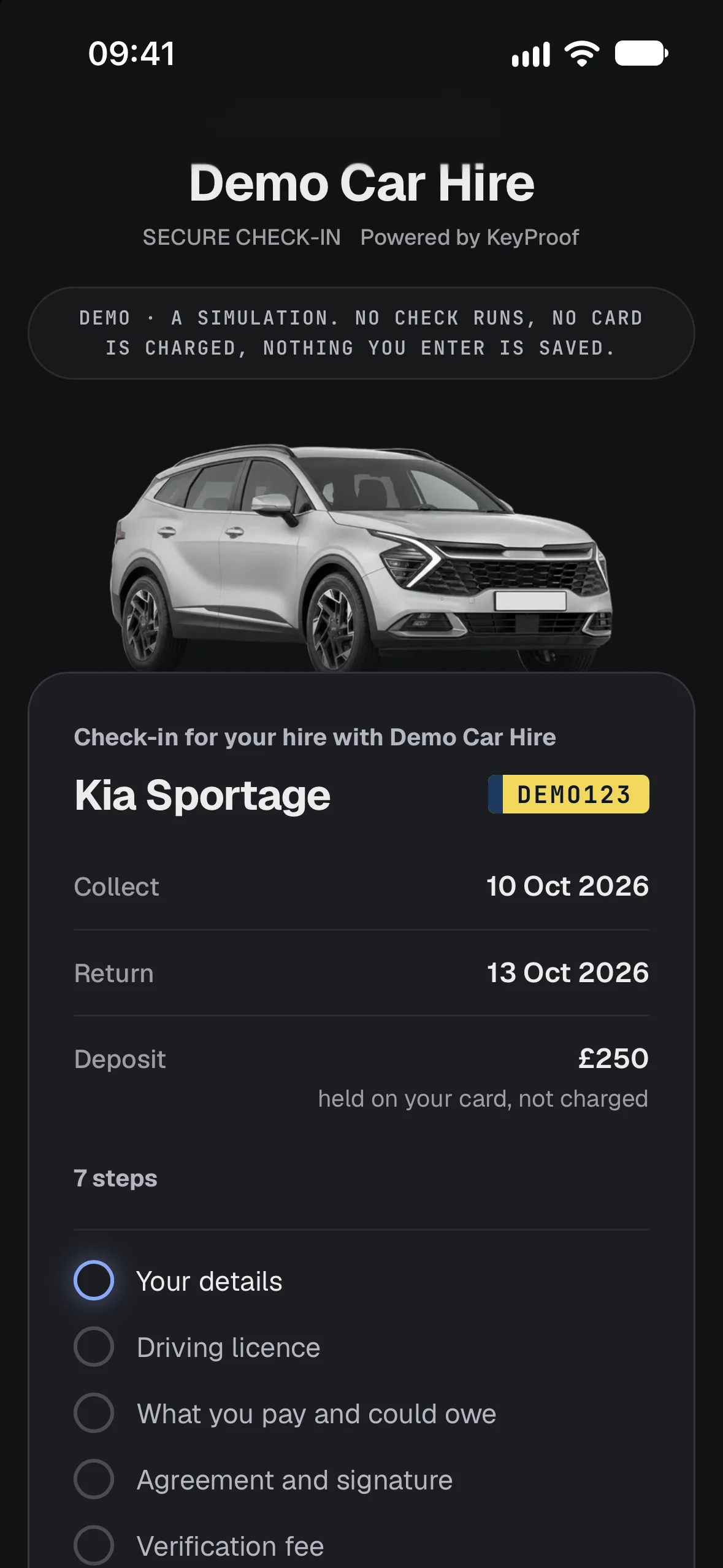
Photos at both ends. Timestamped in between.
- You photograph the car at handover, with the hirer there
- The hirer stands beside you and can confirm the set on their own link, which protects them from being blamed for damage that was already there. If nobody from your firm is at the car, the hirer takes the set on that link instead.
- Six shots, on every hire
- The car is not marked out until the six are complete, an override is written on the record, and that holds on every car and every plan. When the hirer takes the set, their link walks them through the named shots one at a time: front, rear, left side, right side, dashboard, odometer, then anything else worth a picture.
- You photograph it at return
- The return check is yours: the same six shots again, and the return set lands next to the handover set, both timestamped. New damage shows up in the comparison, side by side with the handover set.
- You decide, with the evidence in front of you
- KeyProof never judges damage. It puts the before and after in front of you, and the call stays yours: release the deposit on a clean return, or hold it with the proof already in hand.
- Handover and return, side by side
- Both ends take a full set, so the return photos sit beside the handover photos on the record instead of against whatever anyone happened to point a camera at. The hirer also initials the hire terms one by one before they can sign, on every hire. How supercar fleets use it.
- The record is part of a bigger file
- Condition photos sit alongside the verified identity, the DVLA share code and when you checked it, the e-signed agreement and the deposit record: one exportable pack per hire, ready for an insurer on the day something goes wrong.
Close enough to settle it.
A condition photo is only evidence if it shows the mark. These are the shots a return set needs: close, lit across the panel, one mark per frame.
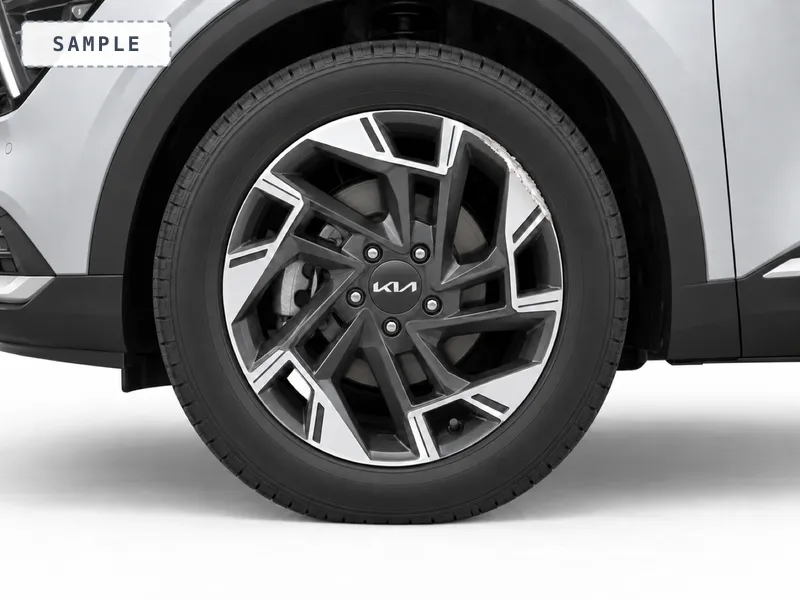
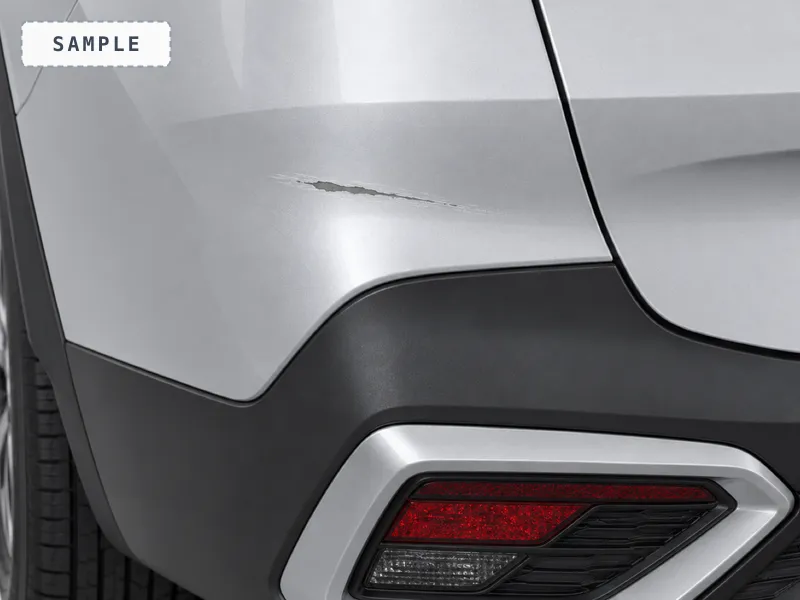
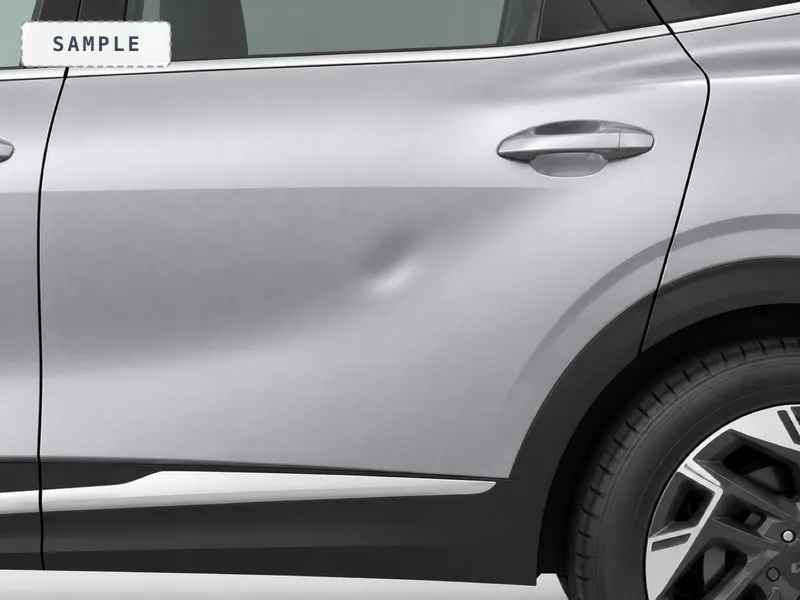
Camera rolls lose disputes. Records win them.
Most operators already take photos. The problem is where they live: scattered across a camera roll, undated in any provable way, mixed in with everything else, and impossible to tie to a specific hire and a specific hirer months later. A condition record only has value if it is bound to the booking, the identity and the agreement, which is exactly what KeyProof does. KeyProof's private beta opens in November, built with a founding cohort of UK hire firms rather than for them: see the full flow in the demo or read how it works.
What every hire leaves behind
IdentityPhoto ID matched to a selfie
LicenceDVLA share code, for your own check on gov.uk
ConditionTimestamped photos, both ends
AgreementE-signed, sealed with a hash
DepositLogged, traceable to the hirer
Every handover documented.
Every dispute shorter.
Timestamped photos at both ends, matched, on the same record as the signed agreement.
KeyProof is selecting UK car hire operators for its private beta, ahead of public launch in January 2027.